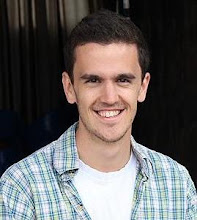
My photo
My name's Adam, I live in Zambia and volunteer with the Christian home based care organisation Hands At Work. Follow me on twitter too @ ad_bedford. Peace! (The contents of this blog represent the sole views and opinions of the author, not of Hands at Work or any other groups or persons.)

Friday, 19 October 2012

Discovering Home


A year has passed since I first stepped off a plane onto South African soil, carrying my granddad’s red leather suitcase, a tatty old Bible, 3 sets of sunglasses and a fedora that only in hindsight can I admit looked ridiculous. I was every inch a missionary, with 12 months to kill. Now, those months are gone and with them the fedora, suitcase and sunnies (lost, bust and stolen), though my Bible’s with me still and tattier than ever. And against all plans and priorities to the contrary, I’m still here. I don’t remember some pivotal or decisive moment, I only know that at some point, and I don’t think I could tell you when, I realised that I wasn’t quite ready to leave. That’s how I find myself sitting in the living room of the Zambian farmhouse I’ve come to call home, batting the flies away from my face on a long and a stinking hot Friday, wondering for the life of me what happened.

I know how I got here; that much at least is definite. It was a heart for adventure, a longing for discovery, that ancient appeal of the obscure that compels you to experiment in life in another culture. It was the allure of the bizarre that got me eating bat wings that I only later found out was just misnamed beef. The law of trying everything once that threw me off a cliff face over a hundred metre gorge (or the person tied to the same cord as me that dragged us both off.) It was the mystery of a calling written on my heart, the longing to discover why God would lead me to such a place at such a time as this. But now the problem I’m faced with is what to make of this time and place when it becomes more than just an experience, when it demands more of me than I at first planned to give. Because it’s still adventure that drives me. A life with Christ, no matter where that life finds you, is nothing if not the most impossible adventure. But I’ve since been met by something deeper.
You see, experience fades like the photos in which you try to capture it or the memory with which you long to keep it. The great unknown becomes the commonplace. The sights, sounds and smells that at first serve the exotic unfamiliarity of it all become familiar, and you find yourself reclining into normality in what ought to be the most abnormal of places. The stench of the dried market-fish with the glamorous name becomes unobtrusive, and the fish itself becomes just ‘dinner.’
And there is a part of you, perhaps the part that drew you here in the first place, that calls it tragic. The explorer in you mourns. But for those longing to truly dig deep into the heart of a strange place, it’s the greatest discovery there is. Discovering that more than the holiday encounter of this exotic, beautiful, fierce, untamed place, there is something deeper. Discovering the heart of why you were ever here in the first place. Discovering the heart of the Father from which that calling first compelled you, the depths of why Christ bids you here, for such a time as this. Discovering in the midst of obscurity a sense of belonging. In other words: Discovering home.

And so I ask again: What happened? The only answer I can hope to give, in the most fitting words I can hope to give it, is that somehow I ended up here, and by ways higher than mine it so happens that here is just where Jesus wants me. Before I left the UK, heading out for the first time on this African adventure, I was barraged by words of advice, many wise, many more not so wise. But few went so deep or have gone with me so long as those of an old housemate of mine. He told me that wherever you find yourself, that is your home. That wherever Christ leads you, whether for a moment or a lifetime, at least for such a time as this, it is exactly where you are supposed to be, and the place and the time in which you find yourself deserve everything that you have. Home is where your rump rests, they say.

That’s answer enough for why I’m here, in the scorching October of Central Africa. There are so many other places I could have been. So many other adventures I could have lived. But the only one worth my life is the reckless and radical adventure of a life spent with God. Above and beyond every longing of my own, it was Him who brought me here. And so here I am, just where I’m supposed to be, for such a time as this, dumbfounded by His ways, and at home.


Thursday, 5 July 2012

Something is Rising (Or, a Really Good Party)


It was one of those days that you just know from the very beginning is going to be beautiful. And by the end, that was really the only word to describe it. Everything about it gave me a feeling as if this were a day God had crafted with extra special care and attention in the hopeful chance that someone, somewhere, might be taking notice. As it so happens, it fell not on any old box of the calendar, but on Congo Independence Day. And as it so happens, I was there! For just a week I was back on the red soil of DRC, and we squeezed so much into that short spell that it’s not worth me trying to recount the whole thing. But the highlight is easy to spot. It was leaving the house just as the sun rose over Congo Independence, it was getting back exhausted but exhilarated after the sun had set, and it was everything that happened in between. That day, deep in the bush, a party was coming together, a party in and for the most enchanting community I know.

Kisunka is a community comprised of five different villages built around a huge lake called Changalele (don’t worry about the pronunciation, I don’t). The few thousand people who have for centuries lived in this lost and untouched world are some of the poorest we support. They have so little. Many starve the whole year round, holding on only for the couple of months that mangoes grow on the otherwise fruitless trees rising up between their mud huts. The lake provides all their water with which they drink, wash, cook, clean, the lot. So you can imagine, sickness is rife. The nearest clinic (in the nearest town) is so far away that pregnant women end up giving birth by the roadside. Many more sick and weary people simply never finish the journey at all. I have stayed in the villages of Kisunka community a number of times and met some of the most beautiful, genuine, compassionate and caring people I’m ever likely to know. I’ve also met there in the shadows of those fruitless trees some of the most hopeless and helpless situations to which I’ve been exposed. I’ve found miracles there too, miracles born of broken and burnt out hearts infused with a most relentless and stubborn faith. An old man within an inch of death one day striding toward us the next pointing his finger to the sky and wearing a smile as if he’s about to burst into tears of laughter any moment. Babies whose lives were almost stolen before they had a chance to realise it had been given, growing happy, healthy and whole. Hearts healed, souls restored, and all that jazz! It was to celebrate the miracles happening in that lost and lonely place that we gathered on Congo Independence Day, 200 of us from across the communities; young, old, village chiefs and village prostitutes, the highest and the lowest and the most forgotten, all of us together to celebrate in the loud and proud way that the Congo do best what God is doing here. And not only what God is doing but what he is doing through these people. Because it is here in Kisunka that, with nothing more than a vision to make a difference, people arose and established the first schools the community has ever known. They’d never had a school before, now there’s one within a couple of kilometres of every orphan and vulnerable child supported by the care workers. It is here that out of the little they have the community started providing food, daily food, for the children that needed it the most. It was for such miracles as these that a party was coming together in the Congo bush, on the shores of that long lost lake. There I listened as the head of all the chiefs, the most respected and wealthy and important person within a 20 kilometre radius, looked at the leaders gathered and with pointed finger told them, “We think that we are at the top and the children are at the bottom. But they are the important ones, and we are their servants.” You hope that in your lifetime you’ll see one or two such miracles. If you don’t, you’ve probably been walking around with your eyes closed.

You see this place shows no memory of a more glorious, fruitful, prosperous, healthy time. Perhaps the village was born in ashes. But on that God-crafted, hot and humid Congo Independence Day we came together to sing and dance and speak and shout about one truth, with one voice: that it will not end in ashes. These children’s lives will not go up in flame. Something is rising. It’s really hard to put your finger on it. It’s hard to sum it up in nice words, as it always is when you’re talking about what God is doing, because he tends to do things that are so unexpected and impossible that the only reaction left for the world that watches is the one I had sitting in that chair watching that celebration take place; the unexpected tear in your eye, the commotion of nerves in your heart that tell you you’re seeing something breathtaking, unimaginable, indescribable and good

Tuesday, 26 June 2012

Loveness, The Story of a Friend


Three days staying in the home of a family deep in the Zambian bush; three days eating what they eat, sleeping where they sleep, doing whatever they do wherever they go to do it. I have stayed in communities just like this before, but this time was different. And it wasn’t because of the unusual size of the rats scuttling along the beams of the thatched roof above my head. It wasn’t that beautiful early morning frost or the unbearably hot sun that soon melted it. It wasn’t trying to squeeze down ground nut porridge and a guava after the ten lumps of nshema and cabbage they tried to feed me every meal. It was a ten year old girl named Loveness; and it was all of it the fruit of a moment two weeks before.

I’d been walking with some of our care workers in the community, a village marked by a single dirt track cutting its way 40 kilometres through the grass with everything else built around it. We saw her in the distance long before we came close enough to greet, strolling toward us in her tattered school uniform. She was with an older woman and the pair of them walked with the archetypal African pace, slow and without purpose. I’ve never liked walking slowly. I figure if you want to get somewhere might as well get there as quickly as you can. But I’ve long since learnt that here you’ll dehydrate quicker rushing to find shade than you will walking slowly, even in the blazing sun. Here people move so slowly you might have cause to think they’re not walking to any place in particular, as if they’re saying, “Why rush? It doesn’t matter what time we arrive.” What matters is the way you spend the time getting there. Because in Africa life isn’t the sum of its events but the space in between them. So a journey is not an arbitrary link between A and B, it’s an occasion for life to happen. Conversation, silence, sharing, laughing, talking; it’s not about “passing the time”, it’s about making of even the most insignificant time something sacred, because relationship is formed as much in the space between significant moments as in the moments themselves. So it was after walking toward each other for 10 minutes on that long dirt track that we finally met. Her name was Loveness. She was 10 years old. That’s as much as I’d been told when I walked over to her to say hello. She smiled at me shyly and took my hand and right then, in that passing moment, something strange happened. I was caught off guard; something from somewhere in my head or my heart telling me that I was going to have a real, deep connection with this girl. I didn’t know what to make of it, but it was so clear. It turned out the lady she was walking with was her grandmother and also a care worker in the community. The two of them turned around and walked with us the other way, back the few kilometres they had just crossed (which really made me wonder whether they had ever been going anywhere in the first place). Some of the team walked ahead of us, some behind, but Loveness and I walked together, hand in hand. Every now and then she’d let go, look at the glisten of sweat that has appeared on her palm, then show it to me with a disapproving expression before wiping it on her skirt, which embarrassed me every time. But then she would take my hand all over again anyway, until the next break. Every now and then as we walked she’d squeeze my hand more tightly for just a moment. Sometimes she would look up at me and say my name, to which I’d ask, ‘yes?’, before she would just turn back. All I could make of it was that she was checking, as often as she needed to, that I was still there. Perhaps checking that I wasn’t about to leave. I can’t read a lot from people’s behaviour, from first introductions, but I could have guessed at least a shadow of the story that her grandmother told me when I asked. I’ve heard stories just like it so many times now. Her father had died four or five years earlier after being bitten by a snake. Loveness and her sisters had been kept in her mother’s care, until she lost her mind and was unfit to keep them. Now, her sisters are scattered across the homes of various aunties and uncles, and Loveness is left with her grandmother. Despite that, the family remains closer than any I have ever met. Every one of them is the responsibility of them all. None of them claims anything for themselves. Perhaps that is why when, two weeks after meeting this mismatched pair, I turned up to invade their home for 3 days with nothing more than a bag of groceries and a backpack, I wasn’t a stranger but a son, a big brother, a friend of the kind that can leave for years and return as if only a day had passed since parting. As for Loveness and me, the language barrier was really no barrier at all. It turned out that she was, even without speaking English, one of the funniest girls of her age I’ve ever met. She took care of her younger and older sister beautifully. She took care of me too, making sure I was safe and well fed, taking my hand when we walked past groups of drunk teens. It all seemed pretty backwards. But then, in a village I don’t know amongst I people I don’t understand with a language I don’t speak, Loveness figured that of the two of us I was the more vulnerable.

Whatever measure you use to define genuine relationship, whatever it is that makes friends of people with nothing else in common but the tie that binds them, I made a friend in Loveness. As unlikely and unfounded a friendship as any I’m likely to have the privilege of knowing! And it was of such a friendship that the voice in my head and my heart spoke two weeks before. God brought us together, whether for her or for me I’m still not sure. But then that’s what makes friendship beautiful, it's the kind of relationship that has no more purpose than the relationship itself. God’s desire was that we meet, and no doubt that we keep meeting. That tells me nothing more than that God laughs when two strangers, across all the spatial and cultural distance that lies between them, become the most improbable of friends.

Tuesday, 15 May 2012

Building Upon Foundations


April 2012
Today I met Chatty for the very first time, and Godfrey for the second. Both of them four years old, both of them stripped too soon of the love and care and security of their parents, and both of them possessors of arrestingly disarming smiles, if not only because they are so rare a thing. It struck me as surreal to see these children face to face, to hold them as closely as I did, after knowing their stories so intimately and for so long. Since April of last year, when a team from our church in the UK returned from a short trip to Zambia having spent time in this community we support, Chatty and Godfrey have been spoken of much. The impact they made upon our team, Chatty upon my own Dad in particular, reached beyond the hearts of only those who met them in the flesh; upon the heart of a church and a family that miles and culture keep far distant from this place. Back then these two young men, both of them wounded in heart and memory, allowed not a corner of their lips the faintest flicker of a smile. But today I saw different children than those of whom I’d heard so much. Welcoming. Loving. Even happy. How fairer the countenance swept with a smile. I started thinking about the way we lay foundations in the lives of others. We first entered this little rural community, obscured deep in the Zambian bush, in 2010 to meet a crowd of children too afraid to approach us except to see the magic of bubbles blown from a little tub of soapy water. Now it’s difficult to walk for fear of trampling on children so happy and so proud to hold us as friends. And this time, Godfrey can be loved in his joy and in his healing, because once upon a time someone else loved him in his pain and poverty. Chatty, this misnamed child as my Dad called him a year before, can know something of safety and security in the presence of strangers such as us because he remembers a stranger who once upon a time walked into his home, and exited it all the same, only leaving behind him the faint aroma of deep and lasting love that can pierce the stench of loneliness, despair and death. We like to think of ourselves as independent and autonomous creatures, only affected by others in as much as we allow ourselves the vulnerability to be affected. I remember sitting in a pub in England listening to the fiery exchange between one woman and a much younger girl, apparently her granddaughter, who was bombarding the older lady with verbal and emotional abuse. Her reply to all of this was something about having very thick skin and not letting insults affect her, particularly from a snotty little brat who should know better. But I thought: what must have affected her in the past, and to what extent, that she would now not allow herself to be hurt by the sting of a well aimed insult, even from a voice as precious as that of her own granddaughter? And I realised, no matter how independent we like to think ourselves, no matter how we may like to believe that we live in a vacuum, only being affected by that which we allow close enough to affect us, the truth of the matter is: we are all of us architects of one another.

One lays the foundation, and another builds upon it. A mother speaks a cruel word to her little girl and the foundation is laid for a lifetime of cynicism and mistrust. Another child loses a father to alcohol and a chasm is ripped in that boy’s heart that no closeness or intimacy will ever be permitted to bridge. They stay with us like a foul taste stuck in the mouth, these bitter memories. But another child, with every reason to give up on life and the world and whichever god had the insanity to make that world and then the audacity to call it ‘good’, against all odds grows up into a happy and healthy child. Why? Because where once he knew only hurt and pain someone loved him into healing, and upon a broken and bent foundation something beautiful was raised. We have the choice, all of us, as to whether we let our past determine our future or allow our future to redeem the past. No pain is beyond redemption. Someone once said that every child comes with the message that God has not yet given up on the world. That must be followed shortly by the message that no child is born to be given up on. If only we could see how much of the healing power of God himself was embedded in our DNA when he gave us the capacity to love one another. Then the quiet word, the passing smile, the tear lent to someone who has used up all their own would never be underestimated in its might to heal. All of us are in either the business of construction or demolition, building trust, hope and love into the lives of those around us or tearing it down. In Godfrey, in that misnamed child Chatty too, people are continuing to build from a broken and a bent foundation something truly beautiful. And few things are as beautiful, few things at once so simple and yet so profound, as a face once etched with pain now swept with a smile.

Wednesday, 2 May 2012

Goma, How Deserted Lies the City


Three days ago, sometime on the 30 April, rebel troops under the command of former Congolese army general Bosco “Terminator” Ntaganda, marched upon the villages surrounding Goma, a large city in north-eastern Congo. The Kivu region of the Democratic Republic of Congo, in which Goma is the largest city, has played host to a dozen or more wars in only the last couple of decades and boasts history’s largest refugee camps, some numbering more than 1.5 million people. At the hands of warlords and forces descending upon Congo’s communities like starved locusts, the people of Kivu and its surrounding villages have become some of the poorest in the world. A billion people worldwide live on less than $1 a day; in Goma countless families live on less than $1 a week. In such an environment in which healthcare is so essential, it is missing; sanitation is simply not a facet of life. Every man, woman and child in Goma knows too familiarly the sound that heralds their exodus: marching on the mountains, gunfire in the hills, screaming in the homes. They know what it means to decide between fleeing into the bush with children slung over their back, where they will have no food, water, shelter or security, or staying where they are and waiting for the soldiers to arrive, young men with Kalashnikovs in hand, whose only wage is as much food as they can pillage, as many women as they can get their hands on. The troops always invade the villages first. This is life in Goma.

And so, when we hear that the soldiers are marching again, again, what are we to do? From the beautiful farmhouse in which I find myself in Zambia, gathered together with all my Hands at Work family for a time of celebration and thanking God and discovering His vision for what is next, what am I to do? It is difficult even to pray. But then, such are the occasions when prayer is most important. When it seems so trite as to be even a joke. This thing we do before we throw the first forkful of dinner into our mouths, and do more earnestly with clenched fists before an exam or interview, this thing we fall asleep doing as we lay our heads down at night, are we really to do that now? 1,000 kilometres away in Zambia, or 3,000 kilometres away in Europe, or 6,000 kilometres away in North America, what more can we do?

How deserted lies the city, once so full of people. Her children have gone into exile, captive before the foe. Our pursuers were swifter than eagles in the sky; they chased us over the mountains and lay in wait for us in the desert. Those who pursue us are at our heels; we are weary and find no rest.
- Lamentations -

Sometimes a broken heart isn’t enough. Walking amidst the smouldering ruins of the once great city he called home, the poet of Lamentations “pours out” his heart upon the ground. Broken, beat, smashed into little more than a puddle on the floor. A prayer like the one above rises from the devastation of a heart as spent as his. He can do no other. My heart is utterly sold out for the Congo. That’s no secret. When I heard about Goma, standing in our Zambian farmhouse as my friend recounts the news he has just received from one of our guys in Congo, I can only describe what I felt as something akin to getting a phone call telling you that your home has been hit by a bomb. And what could I do? Only pray, and pray more. I slept outside that night, because sometimes words aren’t as articulate a prayer as the actions that follow them, and it seemed wrong to crawl under my mosquito net into bed as I finish praying for the safety of thousands sleeping in the bush. I even had the audacity to be a little frightened of some of the sounds filling the night, birds and other unrecognisable animal calls. I was scared because I didn’t know which animals were making the noise. Gunfire is much more distinguishable a sound. And so this is me doing the little more that I can do: asking you to pray also. Even if you're not the kind of person to pray much or at all. Some things are more important than the theological standpoint in which you find yourself in this very moment. Please pray. We can do little more. And as you pray know that God has designs and dreams and visions and promises for Goma, that long forgotten city in some abstract corner of the African jungle. If you don’t know that, then your prayers will go little further than asking God how in His name or in the name of fate or destiny or bad luck or anything else something like this could happen in a world that for all intents and purposes would actually be pretty much perfect were it not for that great slip-up of His in making a creature with the capacity to ruin the place in ways so horrifying as to be unimaginable. Praying like that won’t get you or the children lost in the hills of Goma anywhere. That’s how my prayers seem to always start these days. But that mustn’t be where they end. Wading in an ocean of hearts unreservedly poured out for these children, these women, many of them pregnant, these grandfathers and grandmothers too tired to run again, let us take our lead from the poet, his heart wasted before him on the ground:

I remember my affliction and my wandering
the bitterness and the fall,
I well remember them,
and my soul is downcast within me.
Yet this I call to mind
and therefore I have hope:

Because of the Lord's great love we are not consumed
for his compassions never fail.
- Lamentations -

Tuesday, 3 April 2012

Hard to look and listen, hard to turn away

Someone once wrote upon leaving the Congo, “Oh Congo, what a wreck. It’s hard to look and listen. It’s hard to turn away.” I can’t tell you how truly that resonates.

These last two months I have spent being touched by the lives and stories of children living in a nation the UN recognises as the least developing in all the world. The statistics are bleak; home to 4 and a half million orphans, host to a dozen international wars in only the last two decades, consequentially making it the world capital of rape, torture and war crimes. But statistics offer a distant and disaffected view of a situation that can only hope to be understood at a closer look; like standing back to view a whole work of art while missing the brushstrokes that make up its beauty. No matter how long I’ve been in Africa now, seeking His heart with everything I have and am, I never cease to be reminded that His heart is only found when you stand close enough to be caught by the story, and the face, of just one child.
Statistics will never show you what is going on beneath the surface. You have to come and see for yourself. You have to allow yourself the courage to see with the eyes of Jesus. He sees the depths of poverty and pain, as no one has ever seen or felt them before. But he sees, more deeply written into the lives of “the least of these” even than their pain and poverty, a true and a lasting hope. The Scriptures say, “Hope that is seen is no hope at all.” If that’s true, then God’s eyes are most attentively fixed upon the places in which nothing will change unless He is the One to change it. Sometimes it’s a whole region, like Goma in the eastern Congo; sometimes it’s just one person, like my friend Dancel dying alone, leprous and arthritic, in his sweltering and smelly mud hut. Encountering such people and places, it would be easy to give up hope, as do so many. It is their greatest loss, this dying hope. The human heart seems able to endure just about anything but that. Because the strength to endure is in knowing that there is yet a more beautiful future, so it is when that future is crushed beneath a numbed heart and a beat spirit that a life born of hope is lost. But we stand on a promise, written upon the heart of the nation and all the hearts of all God’s children in it;
...hope that is seen is no hope at all...

And there is hope. Of that I’m convinced.
As for me, I think I’ve been caught in the spell that the Congo casts over most people who visit it. It caught me before I ever stepped foot here, and has only gotten stronger the longer I’ve stayed. Only now it has a face. Actually lots of faces; kids who it’ll be tough to leave behind, some just because they’re great kids, others because I’ll leave them in just the same state in which I first met them. It’s hard to look and listen; it’s hard to turn away. Hard to turn away from people in whose stories I have had the honour of sharing; people with whom I’ve discovered a relationship strong enough to penetrate language, culture and background. It feels like I’m standing on an axis moment upon which my life is going to turn, one of those “there’s no going back after this” moments. I’ve seen and heard things that God won’t soon allow me to forget. Because Dancel is still laid up on the floor of his mud hut, dying and alone, and the thousand other faces burnt onto my heart are still bearing the same broken expressions, betraying the deep and lasting wounds they hold. It’s hard to turn away, even impossible, because to do that would be to miss not only the honour of sharing in the life of such as these, but the inexpressible privilege of playing a part in changing it.
...to make the hope that is unseen visible
...to afford freedom to those from whom it has been taken
...to reawaken life where it has been lost, more and better life than we ever dreamed of.
To let that pass me by would be to miss the gift for which God put me here. But I won’t let it pass. No way.

Monday, 6 February 2012

Answering the Cry of a Broken Heart

I made a thousand excuses. I was tired. I needed a break, some alone time, after one of those mornings where the simplest work feels like trudging through syrup. I’d just spent a weekend in the community – early mornings and late nights and everything in between physically, emotionally and spiritually exhausting. My arsenal was loaded – “Here you are God, here’s a bunch of excuses, all of them as good as the next, pick one!” But it didn’t matter; the boy I walked past with nothing but a smiling glance was going to follow me whether I liked it or not. When I noticed he was tracking my steps I cast him the vague, polite pleasantries in the hope that it would be all he wanted from the token white man. But he kept following. Soon he was shoulder to shoulder with me, a cheeky but strikingly childlike smile stretching across his adolescent face. He started rambling to me in French, but the only thing I could translate was that whatever it was he was asking, he was genuinely interested in getting to know me. But I was tired, so I walked past and walked on. But he followed. When we came to some crossroads I asked him in slow, slightly elevated English which way he was going. He just smiled, and said he didn’t understand. So I carried on walking, as did he. Eventually, having trawled about town lying every time he asked if I spoke any French at all, we got to the bakery I was going to for lunch. Though he was clearly hungry, he didn’t ask for any food. It wasn’t what he wanted. Nevertheless I bought him a nice bit of bread and a bit for the boy begging on the street outside, to massage that pesky ache in my conscience. I continued to walk and he continued to talk. Approaching the little shop I was going into to buy a Coke I prepared to say a not-so-fond farewell to the young man, when I picked out a single word in his hurried French. Orphan. I felt like I’d been hit by a freight train. Not knowing what to do with myself, I invited him into the shop, sat him on a chair and bought him some proper lunch. We sat there in silence, him smiling that broad and beautiful grin, me feeling like Dr. Jekyll looking in the mirror and discovering that he’s Mr. Hyde. I asked him to pray for the food, but he was too shy and instead the lady who owned the shop came over and, placing her hands on our Cokes, thanked God. He was excited to discover that I was a Christian. What a tragedy that sometimes it is not our character that distinguishes us as Christians, but our little religiosities. He pulled out of his pocket a tattered little French Bible. It was the only thing he carried.  Throwing it open he clumsily thumbed through the pages then stopped and pushed it across the table to me. Pointing at a verse on the page he kept repeating: “my favourite”, and though I didn’t understand the language, I recognised the verse.

– Ask and it will be given to you. Seek and you will find. Knock and the door will be opened to you –

The train hit me for the second time. I thought, what if this morning when he got out of bed, this young boy asked of his Father in heaven that today, somehow, he would meet someone who cared? What if this morning he simply asked for his daily bread and as he did so, opened up that tattered little Bible and read the promise of Jesus: Ask and it will be given to you? What if today I was God’s messy, flesh-and-blood answer to the cry of a boy’s heart, longing for love? And I almost missed it. I almost missed Him – Jesus disguised in the face of an orphaned boy named Francois, walking the streets of Likasi in search of a smile. I thought: how often we walk past? How often in the noise of the madding crowd do we miss the Father’s voice, calling us to stop and look around? How often do we miss that little gift of God – that invitation to the inexplicable privilege of being the answer to someone’s prayer? Even today someone cries out to a God they aren’t sure they believe in and he says: I am coming; I am sending my son, my daughter, to be the light of life to you who are lost in darkness. And what shall we do? Walk on? Or stop and say ‘Yes’ to the invitation of Jesus, compelling us to give of ourselves. Such is the mystery of his presence in us, letters from Christ to a broken world, signed and sealed in love, not written on paper and with ink but on human hearts and with the blood of Jesus. Today God invites me to answer the cry of just one heart. And what does he ask of me? Only that I act justly, that I love mercy, and that I walk humbly with my God. Or perhaps you could say – only that I never carry on walking when God stoops down to touch a heart in love.